At first glance, it may seem that we all eat the same food in the Balkans. Across borders and languages, the dishes look familiar enough. But identity—of a group, or of a nation—lives in the details: a spoonful of sour cream, a handful of nettles, the size of a sarma…
Those details matter. Change them, and the story shifts—it becomes someone else’s. In this part of the world, identities are fragile and easily misunderstood, especially when glimpsed in passing on social media, where a quick scroll can blur the local flavour behind a dish.
I often return to the question I’m frequently asked about Romanian cuisine: “What is truly yours?” If many dishes resemble those of neighbouring countries today, then what defines Romanian cuisine?
The idea that a cuisine in the middle of Europe could have developed entirely independently, untouched by outside influences, still baffles me.
Even when words sound similar, or recipes follow the same steps, meaning is never identical.
What makes a dish truly ours is not just how it is prepared.
It is the collective memory attached to it: the rituals that surround it, the language used to name it, the moments in which it appears. Over time, these layers of meaning become part of our culinary DNA.
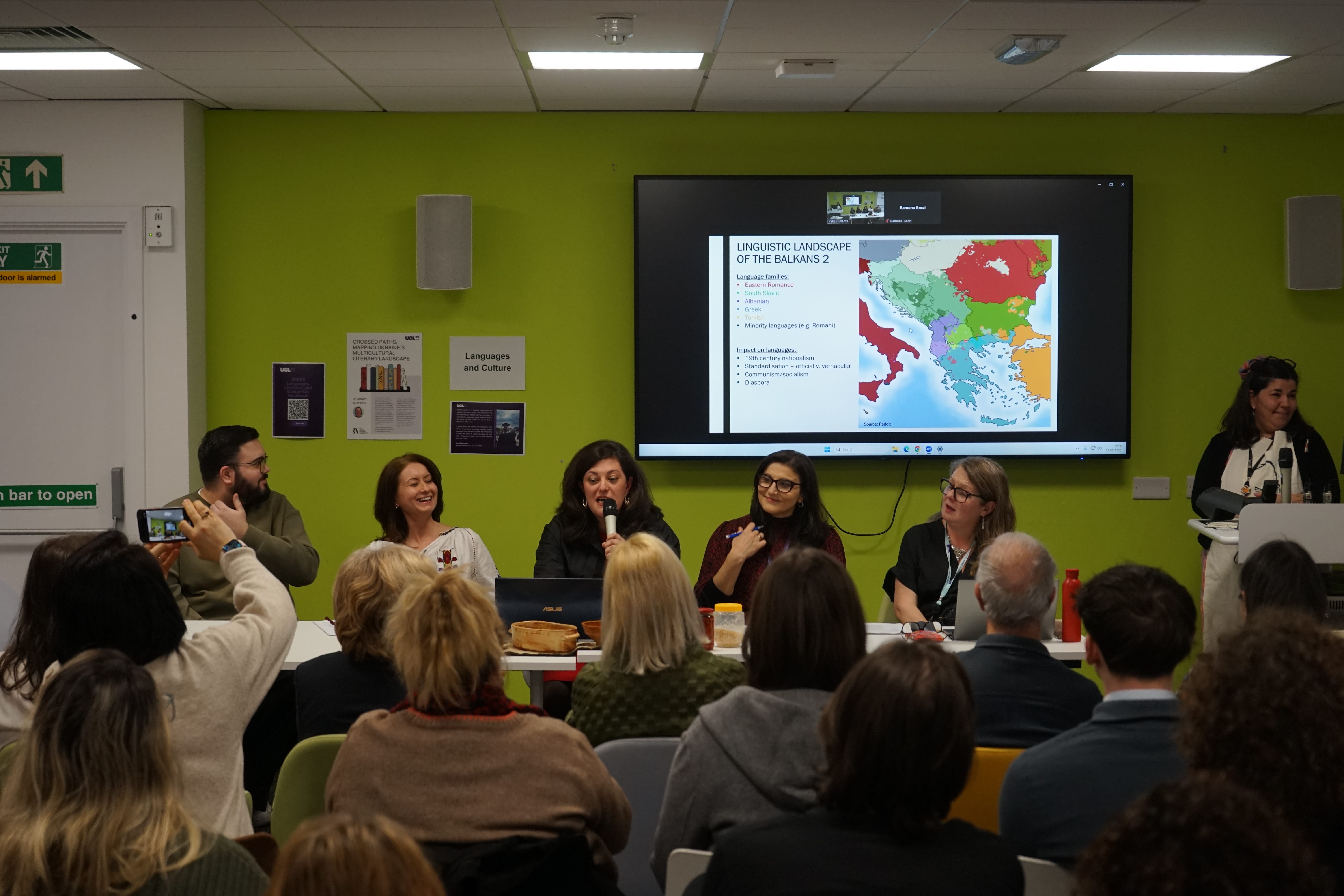
I was reminded of this recently when I was invited to take part in a panel discussion at University College London as part of a series of events organised by the UCL School of Slavonic and East European Studies (SSEES), under the theme Eating the Balkans. We talked about these exact issues: What is ours? What’s in a name? Which Empire renamed our dishes? Which words are misleading?
Photo credit: Patricia Gabalova.
Irina Janakievska, author of ‘The Balkan Kitchen’, posed these questions with precision in her presentation.
Alongside Irina were Arbër Qerka-Gashi, founder of the grassroots publication Balkanism; Ana Ilievska Zavrsnik* from UCL; Dr Mirela Xhaferraj** UCL; and UCL Associate Professor Ramona Gonczol***, all with extraordinary depth of knowledge and perspectives shaped by different parts of the region.
Photo credit: Patricia Gabalova
My role was to speak about Romanian cuisine, particularly the south and east of the country, where Balkan influences are deeply woven into everyday life.
As the evening unfolded, it became clear that what we were really discussing was not ownership, but recognition.
We listened closely—to names, to accents, to rituals—and in doing so, we acknowledged one another. We made room at the table not just for dishes, but for the people and histories behind them.
The conversation revealed both our shared history and our distinct identities. The Balkans share ingredients and techniques, shaped by centuries of proximity, trade, empire and migration.
And yet each community’s dishes carry their own memories, meanings and rituals.
By recognising and honouring these differences, we begin to see that we are not strangers, but neighbours—connected through food, culture, and history.
Romania occupies a particular place in this landscape. Despite centuries of influence, pressure, and control, Romanian has remained a Latin language in both structure and vocabulary, firmly part of the Romance world.
This linguistic continuity is the clearest expression of Romanian identity within the Balkans.
The terms Vlach and Vlaški are deeply rooted in this history and even gave rise to the name Wallachia, today’s southern Romania. Across the Balkans, Vlach also became a social term, often used to describe shepherd communities.
And while the Balkans and Romania may not have been crossed by a major Silk Road, they were shaped by something else just as important: a vast network of transhumance routes.
These seasonal journeys of people and animals stretched across regions and borders, enabling cultural and linguistic exchange over long distances—far beyond the local paths we imagine today.
These histories are still legible on the plate.
The south and east of Romania carry a strong Balkan spirit. Transylvania, in the centre and north, bears clear traces of German influence. And you can taste the difference.
In the south, a summer evening is often spent with family and friends gathered around a barbecue. In Transylvania, people come together around an open fire, waiting and celebrating as food cooks slowly in a large pot called a ceaun. Different rhythms, different rituals—different stories told through food.
Not The Same
Romania has a few dishes that tend to spark curiosity when I mention them—and they usually require a disclaimer. I often have to say, “It’s not the dish you’re expecting from the Middle East”
The ‘infidelities’ are obvious when it comes to the choice of meat: pork is most common, unlike lamb or beef, which dominate much of the former Ottoman Empire. We use sour cream rather than yoghurt, walnuts instead of almonds or pistachios, and cornmeal sits at the centre of our culinary world, not at its fringes.
Sarmale, stuffed cabbage rolls, are found across Eastern Europe and the Balkans, and take many forms.
In Romania, they are made with sauerkraut leaves, and their size often reveals their region of origin. Medium-sized sarmale, called ‘white sarmale’ because there is no tomato sauce, point to Transylvania; small ones cooked with tomatoes come from Moldavia. Traditionally served with polenta and sour cream, sarmale are a dish for celebrations — and for leftovers the next day.
Pilaf is another example of this culinary divergence: in Romania, it is cooked like a risotto but with long-grain rice, and served as a complete dish—not merely as a base for grilled meat.
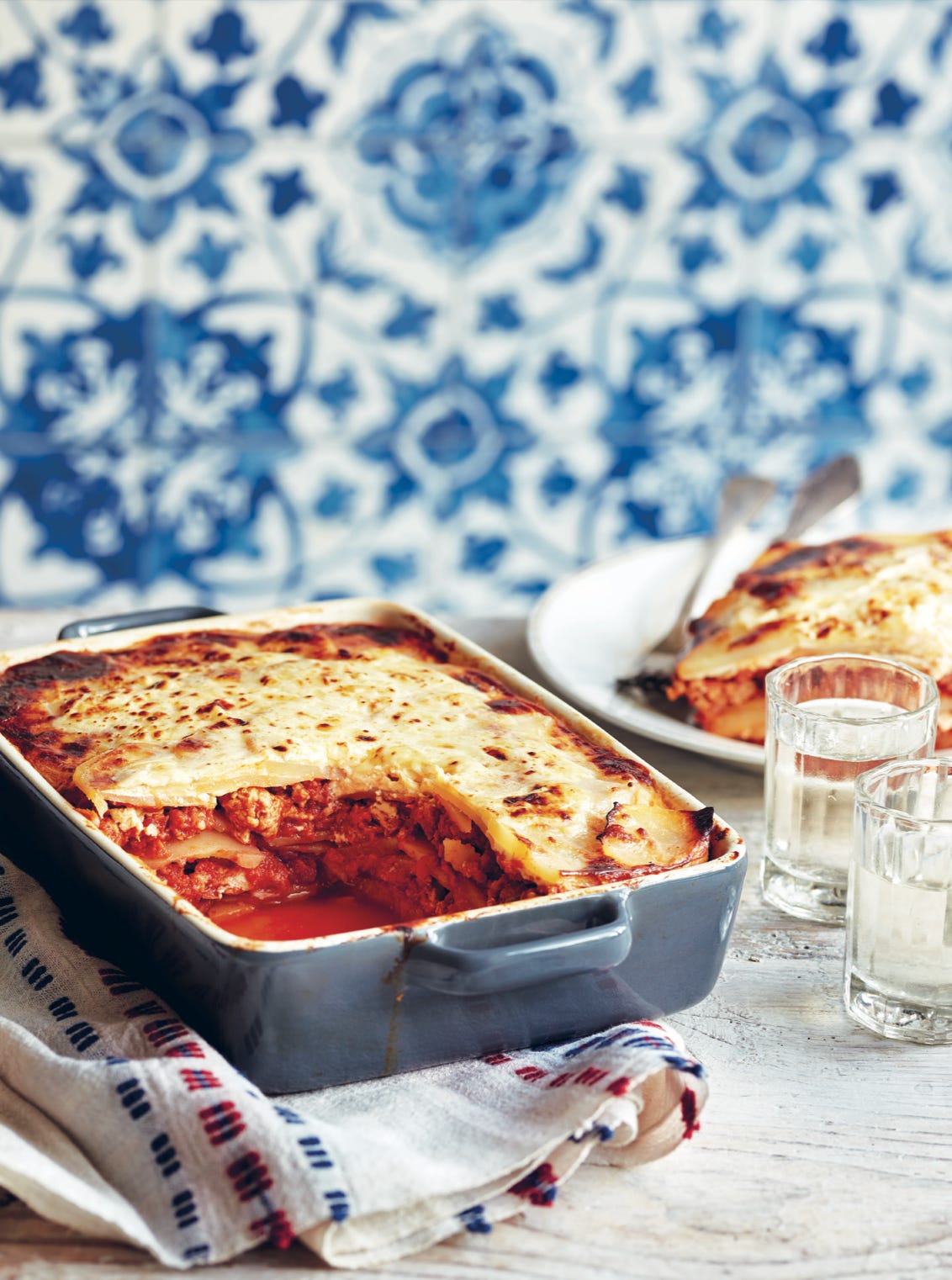
And then there is musaca, which Romanians make with potatoes and a topping of sour cream mixed with eggs. The list continues in my book Danube, which delves deeper into the stories and flavours of southern Romania.
At one point, someone in the audience—a student from Bulgaria—asked about Curban, a ritual celebration that has survived since pagan times. I have written about it here, so my answer followed those lines.
At first glance, it may all look the same. But when we pay attention to the details, we begin to understand not just what we eat, but who we are.
Romanian Musaca
This newsletter will always be free. Sharing it is the best way to support my work.
Photo Credit Jamie Orlando Smith for ‘Carpathia’ book
Serves 4
For the filling:
1 tbsp vegetable or sunflower oil
2 onions, finely diced
1 carrot, finely diced
500g minced pork
1 tbsp paprika
1 x 400g tin chopped tomatoes
300ml passata
Salt and freshly ground black pepper
For the potatoes:
4 medium potatoes
1.5 L water
For the topping:
100g Cheddar cheese, grated
150g sour cream
2 egg yolks
To assemble:
15g butter
To make the filling, warm the oil in a frying pan over medium heat. Add the onions and carrot and sauté for 6–7 minutes until softened. Stir in the remaining ingredients and cook for about 25 minutes, stirring occasionally, until the mixture thickens and reduces.
While the filling cooks, peel and slice the potatoes into 2–3mm rounds. Bring a pan of water to the boil, blanch the potatoes for 5 minutes until just tender, then drain and set aside.
For the cheese sauce, combine the cheese, sour cream, and egg yolks in a bowl and mix until smooth.
Preheat the oven to 180°C (350°F/gas mark 4). Grease a 25 x 18cm roasting tin with a little butter. Arrange a layer of potatoes on the base, slightly overlapping the slices. Dot with butter, season, and spread over half the filling. Repeat with another layer of potatoes, butter, seasoning, and the remaining filling. Finish with a final layer of potatoes and pour over the cheese sauce.
Bake for 30–35 minutes, until golden and bubbling. Serve warm with a fresh tomato salad.
Poftă bună. Enjoy.
My newsletter offers free recipes and travel inspiration from this part of Europe, including Romania and Transylvania, where I’m from.
You can support this free publication by purchasing my books, available in bookstores and online worldwide:
‘Carpathia, Food from the heart of Romania’
‘Tava, Eastern European Baking and Desserts from Romania and Beyond’
‘Danube, Recipes from Eastern Europe’.
Thank you.
Notes:
Who’s Who at UCL:
*Ana Ilievska Završnik has been teaching Macedonian language evening classesat SSEES UCL since 2019 and Slovene classes since 2024. She is also a translator and chartered language consultant, with expertise in Macedonian and Slovene languages. Her consultancy services span the public and corporate sectors across the UK, Slovenia and N. Macedonia. Committed to humanitarian causes, Ana generously volunteers her translation and teaching skills to offer integration mentorship for international human rights organisations. Ana is a founder of Language Yoga – School of Macedonian and Slovene language, as well as the organiser of Walk and Talk session for language professionals.
**Dr Mirela Xhaferraj has been teaching Albanian at UCL SSEES since 2017. She obtained her PhD degree in 2012 with a comparative study of the verbal systems of Greek and Albanian from the University of Tirana, Albania, where she worked as a Lecturer of Greek Language in the Faculty of Foreign Languages until 2016. Her research interests are focused on the Albanian and Greek languages, literature, and culture. She has authored several articles in scientific journals and has presented at various scientific conferences on the Greek and Albanian languages. Additionally, she is a published literary translator from Greek to Albanian.
***RamonaGonczol, Associate Professor (Teaching) Romanian Language at UCL, is the co-founder and convener of the Interdisciplinary Research Group PROLang (Policy, Research and Outreach in language-based area studies).
Thanks for reading Recipes and Stories from Eastern Europe! Subscribe (it’s free) to receive new posts and support my work.
I seem to remember though that our musaka was made also with eggplant (Iași). But maybe I don’t remember correctly. But I definitely remember the taste and aroma of sarmale cu mǎmǎligǎ☺️




Bravo. What a generous fascinating post Irina.
Beautiful, gorgeous post.
I seem to remember though that our musaka was made also with eggplant (Iași). But maybe I don’t remember correctly. But I definitely remember the taste and aroma of sarmale cu mǎmǎligǎ☺️