
Curd Cheese and Candlelight: Easter Traditions from Romania
Recipes and inspiration for your Easter table

In Romania, Easter baking would be unimaginable without curd cheese—brânză de vaci—a fresh, tangy cheese that captures the essence of spring and renewal. Rooted in the country’s pastoral traditions, this cheese reflects the abundance of the Carpathian landscape, where cattle and sheep graze on lush mountain pastures and meadows.


Curd cheese is more than just an ingredient; it’s a symbol of purity and new beginnings. Its light, crumbly texture and gentle acidity bring balance to rich Easter bakes, as you can see in the recipes that follow.
At Easter, curd cheese connects generations through flavour and ritual baking. It embodies the simplicity of rural life, the generosity of the season, and the joy of gathering around the table to celebrate renewal.
From Pastures to Pască
There’s nothing quite like Romanian Pască in all of Eastern Europe.
This rich, golden brioche is filled with curd cheese, sugar, eggs and sultanas, baked especially for Easter. On Easter Eve, it’s taken to church to be blessed during the liturgy, then shared as the first bite to break the Lent.
In my family, Easter begins at midnight—with a slice of Pască.

Easter Vigil on the Evening of the Holy Saturday
The Easter celebration in Romania begins on the night before the holiday, when people gather at churches across the country just before midnight. It’s a moment that goes beyond religion, in the sense that you don’t need to be religious to take part. Instead, it’s a wonderful chance to share a special moment with loved ones. Some people travel to specific churches or monasteries in Romania for the event, while others, like my family, go to their local church.
I always preferred staying close to home so I could return quickly after the service and savour that first slice of Pască. For many Romanians, Easter truly begins at midnight, breaking the 40 days of Lent with that first, delightful slice of cake.
Cristos a înviat - Adevărat a înviat


Crowds fill the churches, waiting to receive the Holy Light.
In Greek Orthodoxy, this sacred miracle takes place at the Cathedral of the Holy Sepulchre in Jerusalem, where the flame is said to ignite spontaneously. At midnight, Orthodox priests around the world emerge from the altar carrying the Holy Light, passing it to the faithful. One by one, all candles are lit—the priest lights those nearest to him, who then share the flame with others, until the entire congregation glows with flickering light.
Within moments, the darkness of the night gives way to a sea of golden light and the priest’s voice rises above the hush: “Christ has risen.” The crowd answers as one—“Indeed He has risen”—a wave of sound that seems to lift the very air. It’s a moment of unity, and you sense that you are part of something greater than yourself.
Then the spell softens. People begin to head home, shielding their candle flames from the wind, carrying the light through the streets. We place our candles beside the icon in our homes, whispering wishes for health and happiness. And when the moment settles, we smile and say “Cristos a înviat”—Christ has risen—then wait for someone nearby to acknowledge it with “Adevărat a înviat”, and finally… we eat.
Easter Eve Food Blessing

People gather a small variety of dishes they've prepared for Easter lunch, arrange them carefully in baskets, and take them to church to be blessed during the evening liturgy. If you peek inside, you’ll see dyed eggs, Pască, cozonac - walnut filled bread, drob - lamb meatloaf, sausages, and a little pot with salt (symbolic of the salt of the earth) and a candle.
I wrote about traditional Romanian Eastern dishes for the National Geographic Traveller; here is the link.
If you have my books, you too can celebrate Easter the Romanian way:


Drob, lamb meatloaf, and Pastrami Leg of Lamb from “Carpathia” cookbook


Stufat, lamb and spring onion stew, and Dobrogeana, cheese pie, from “Danube” cookbook


Cozonac, walnut festive bread, Poale-n brâu, sweet cheese pies, and from “Tava” cookbook
First Recipe: Romanian Easter Pască
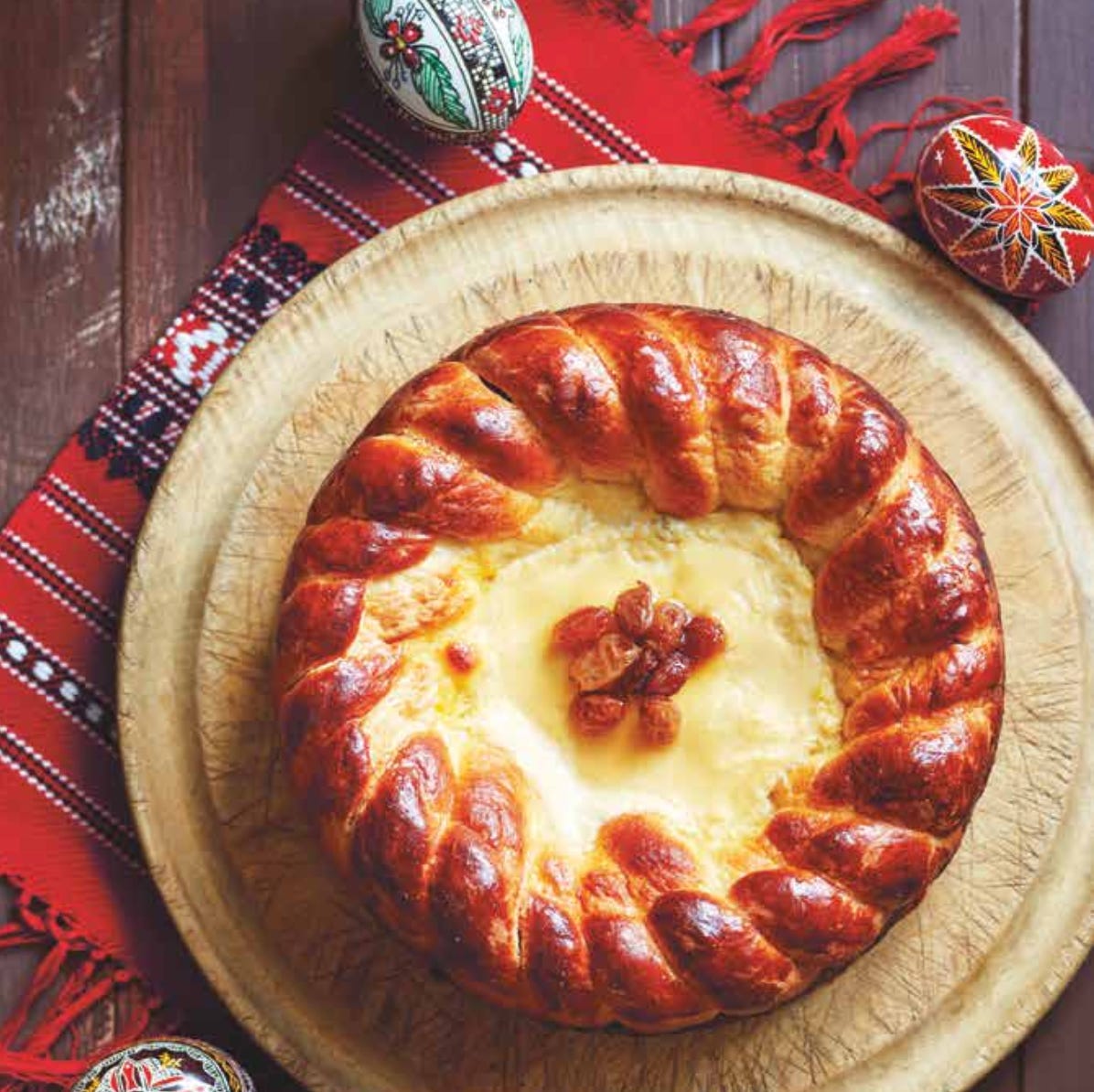
For the dough:
300g bread flour
40g caster sugar
10g yeast
165g full fat milk
2 egg yolks
pinch of salt
70g melted butter
For the filling
200g curd cheese, twarog, ricotta or farmer’s cheese
150g sour cream
25g caster (fine) sugar
2 egg yolks from medium size eggs
zest from 1 large lemon
1 tbsp vanilla extract
75g sultanas soaked in 75ml warm rum for 30 min, then drained (optional)
For baking:
1 egg yolk mixed with 1 tsp milk
Method:
To prepare the brioche dough, combine the flour, sugar, yeast, milk, and yolks in the bowl of an electric mixer fitted with a dough hook. Knead on medium speed until the dough starts to pull away from the sides of the bowl. Add a third of the melted butter and knead until well combined, then repeat with the remaining butter. Cover the bowl and allow the dough to rise in a warm place for 1½ hours at about 21–22°C.
To make the filling, combine all the ingredients together.
Grease a 25cm (10in) pastry ring or springform tin with the base removed, and place it onto a non-stick baking tray lined with baking paper.


Divide the dough into two portions, and roll one half to fit the size of the springform ring. Place it inside the ring, making sure the dough touches the sides. Divide the remaining half into two pieces. Roll these into two ropes long enough to encircle the inside of the ring. Twist them together and position them inside the ring or tin to create an attractive border around the sides. Cover with a clean kitchen towel while the oven warms up to 190°C/375°F/gas mark 5.
Brush the edges with the egg wash, then pour in the filling. Bake for 25–30 minutes on a lower rack until the filling is soft and slightly wobbly in the centre. If the dough darkens too much, cover it with foil. When finished, remove from the oven, lift the pastry ring, and transfer the cake to a wire rack to cool.
Other desserts with curd cheese from my book “Tava", the names of the dishes are in the caption:


Recipe two: Plăcintă cu Brânză, Sweet Cheese Pie
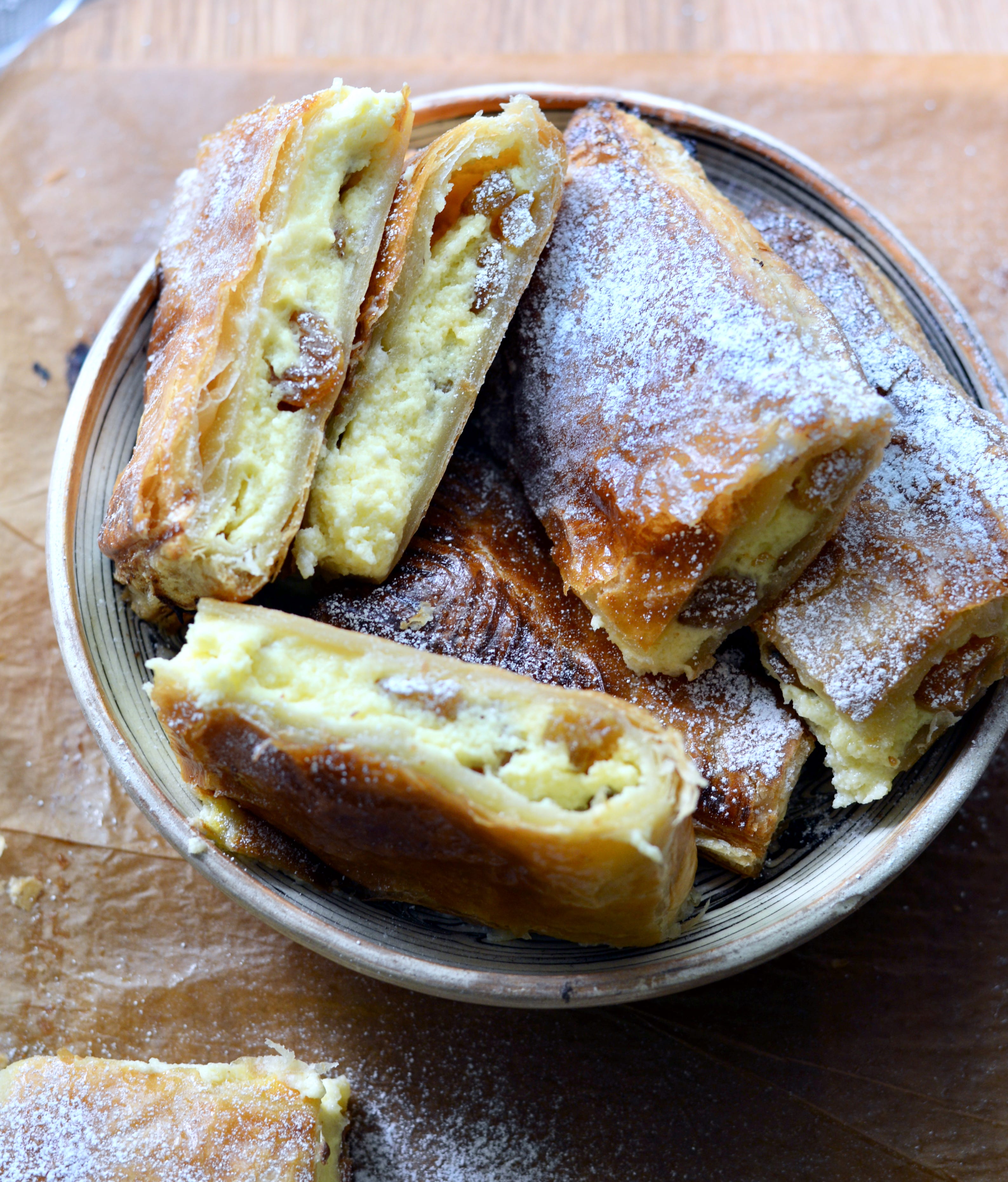
Ingredients:
Serve 8
50ml dark rum
50g sultanas
200g cheese, twarog, ricotta or farmer’s cheese
1 egg yolk
25g caster sugar
25g semolina
2tsp vanilla extract
1 large lemon, zest only
1 sheet ready-rolled puff pastry
Method:
Warm the rum gently in a small pan, then add the sultanas and let them soak for 1 hour. However, if you don’t like sultanas or rum, this step is optional. Meanwhile, prepare the filling by combining all the ingredients together. Spread the mixture over one half of the rolled puff pastry, fold the other half over, and press the edges with a fork to seal. Note that you might not need all the filling; it depends on the size of the puff pastry sheet you are using. Bake at 180°C for about 20 minutes, or until golden brown. Allow to cool, dust with icing sugar, and serve.
Poftă bună, enjoy.
Gifts for Easter
In Romania, Easter is a little like Christmas. We exchange gifts that don’t necessarily have to be chocolate—they can also be books. So, if you are like us, here are some helpful links to the three books I’ve written so far about the culinary story of Eastern Europe, with a focus on Romania.
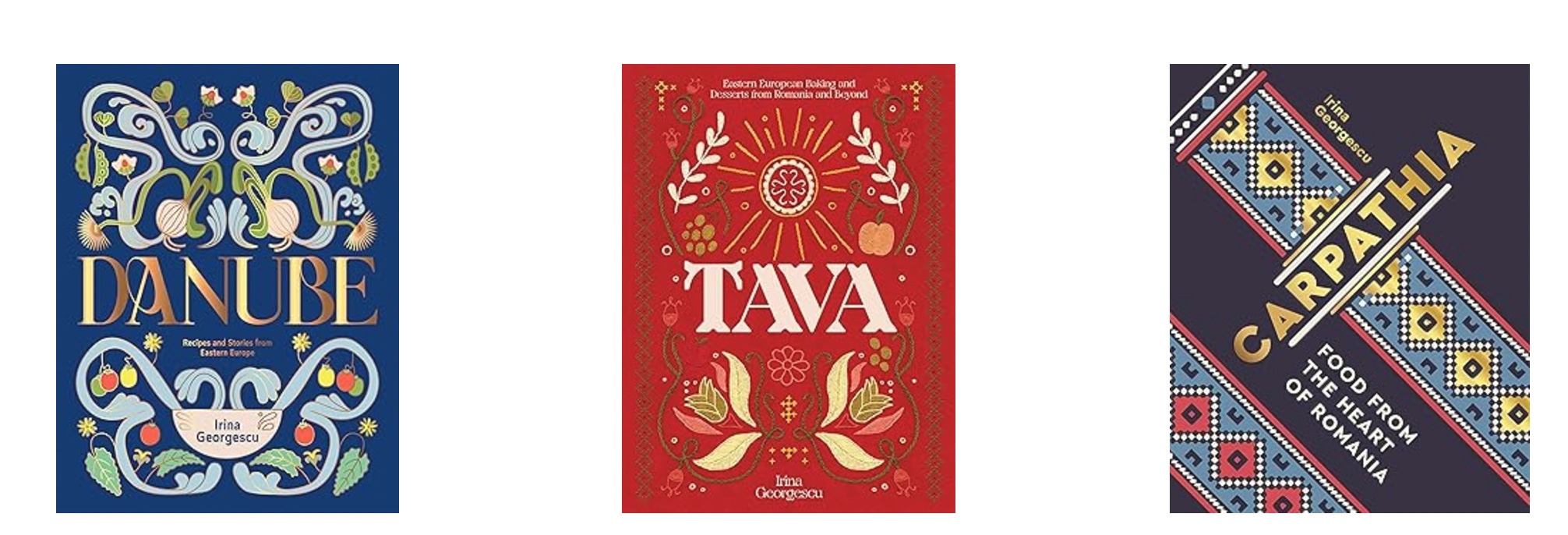
Danube is a journey along the River Danube and the story of southern Romanian cuisine. You will learn how people cook at home in over 100 (mostly vegetarian) recipes. Danube UK here or here and Danube US here or here. Of course, also at Omnivore Books, Now Serving LA and Book Larder.
Tava is a baking and desserts book (so not just baking) that tells the ethnic story of Transylvania in 100 recipes. Tava UK here or here and Tava US here or here.
Carpathia has staple dishes that you can find in restaurants and also homes if you travel to Romania. Carpathia UK here and here Carpathia US here and here.
Georgia Culinary Trip with Renowned Author Naomi Duguid
Author NAOMI DUGUID is once again leading her much-loved culinary tour in Georgia this year, continuing a tradition she’s built over many years. The newly announced 2026 dates are now available on her website here. It’s the kind of trip I dream of joining one day—because when it comes to discovering the true spirit of Georgia, no one does it better than Naomi. Her lifelong dedication to exploring and documenting the food cultures of Central Asia has produced a body of work that’s both monumental and deeply respected across the culinary world, admired by anyone who values authenticity, insight and a profound sense of place.
Thank you all for subscribing to my newsletter, reading my posts, and enjoying the recipes. I truly appreciate your support, whether through liking my content or sharing it.
You're a fantastic and supportive group, and I value each of you.
Wishing you a delicious Easter, if you are celebrating, and Poftă Bună, bon appetit.
Irina X
I was Protestant when I first met and dated my wife (daughter of Greek immigrants). I'll never forget the first Pascha I spent with her and her family. I nearly broke down crying when the priest stepped through the Royal Doors with his candle and proclaimed, "Come receive light from the Undying Light, and glorify Christ, who is risen from the dead!"
Then to her cousin's house with various Greek dishes and the wonderful Greek Easter bread tsoureki! I've since learned to make tsoureki for the family.
Good morning Irina. That's a lovely looking pasca.
Have to say, though, that the curd cheese and currant/sultana filling is something I have seen before, a long way from Romania. I did some of my growing up in rural Yorkshire, and during the summer many villages put on a summer agricultural show. There were usually classes for home cookery, and one of the standard classes was a Yorkshire curd tart - with a filling made of eggs, curd cheese, sugar, milk and lemon. (No sour cream, though).