

There’s a particular moment on our journey in Transylvania when it stops being about flights and hotel rooms, and we realise we’re actually here. It usually happens when we gather in front of an outdoor oven, baking bread, and the air fills with its warm, unmistakable scent. So, we pause to take it all in and let the adventure begin.
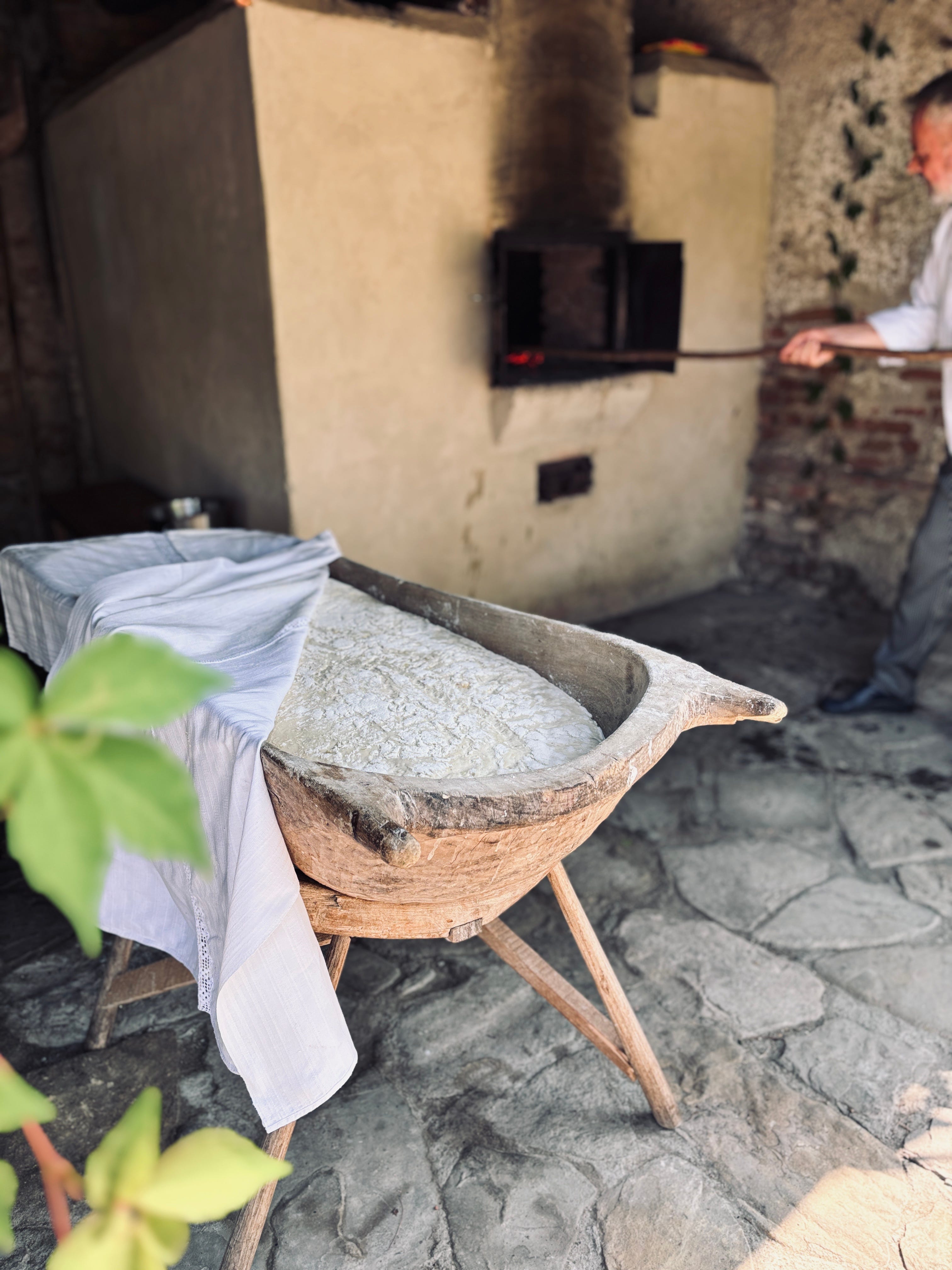
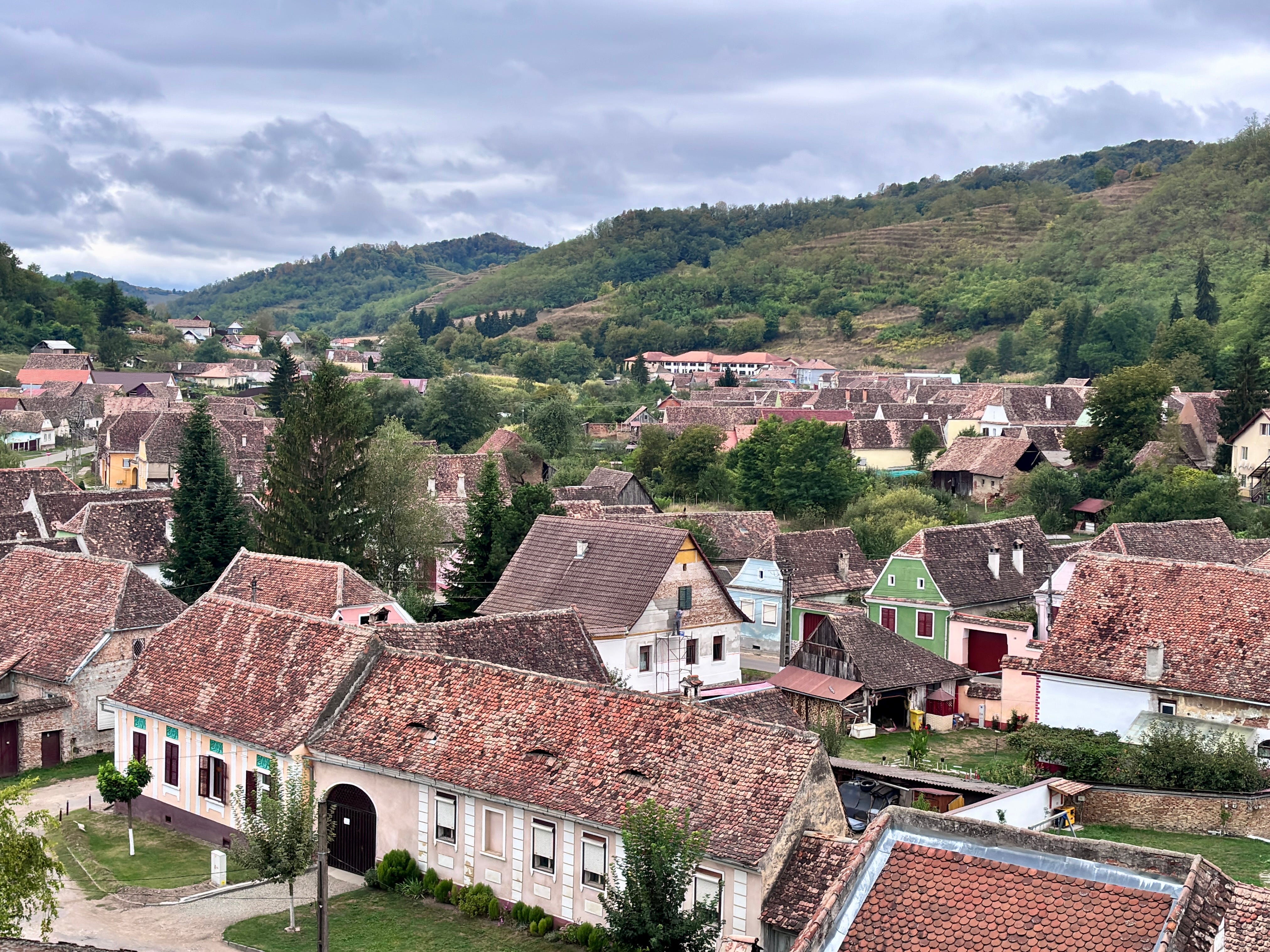
We are surrounded by Transylvanian Saxon architecture, which has somehow survived to this day, basking in the soft light of late summer. We linger in the garden, seeking the shade of linden trees with our appetites stirring with anticipation. It is the aroma that finds its way from the oven to us, that keeps us on our toes: the sourdough loaves rising, the crust darkening and deepening in flavour in the hot embers.
Fire, Water And Flour
We sit at a long table in this landscape and realise that we are gathered around something much older than the meal in front of us: an ancestral way of cooking with fire, water and flour. These ingredients have defined this land for thousands of years. The landscape, the oven and the table belong to the same story, and with them, we do too.
The next day, we find ourselves near another oven, this time baking something sweet. Again, the aroma brings everyone to the table: sugar and butter melting together, filling the air around us. Making cozonac and lichiu also brings together two culinary traditions, one Romanian and the other Saxon, each carrying its own meaning of this place.


Making Transylvanian griddle breads gives us another glimpse into the everyday kitchen of old Transylvania. The filling is simple: potatoes and cheese. Yet preparing them ourselves here makes that simplicity feel memorable. It is a way of cooking that has travelled through generations and found its way back to us.
The Story At The Table
It is here that, for me and everyone else, the story begins. Why do we eat what we eat in Transylvania? What are the flavours? Do we cook more with herbs than with spices? The table is instantly connected to the landscape and history. The dishes on the table are not just food; they reveal an act of culture, a reflection of the landscape - the mountains, the gardens, the woodlands, the sky and the fortified churches. This landscape shaped history: migrating tribes, settlers, rulers and people. This cultural exchange within this space brought in foods and cooking techniques.
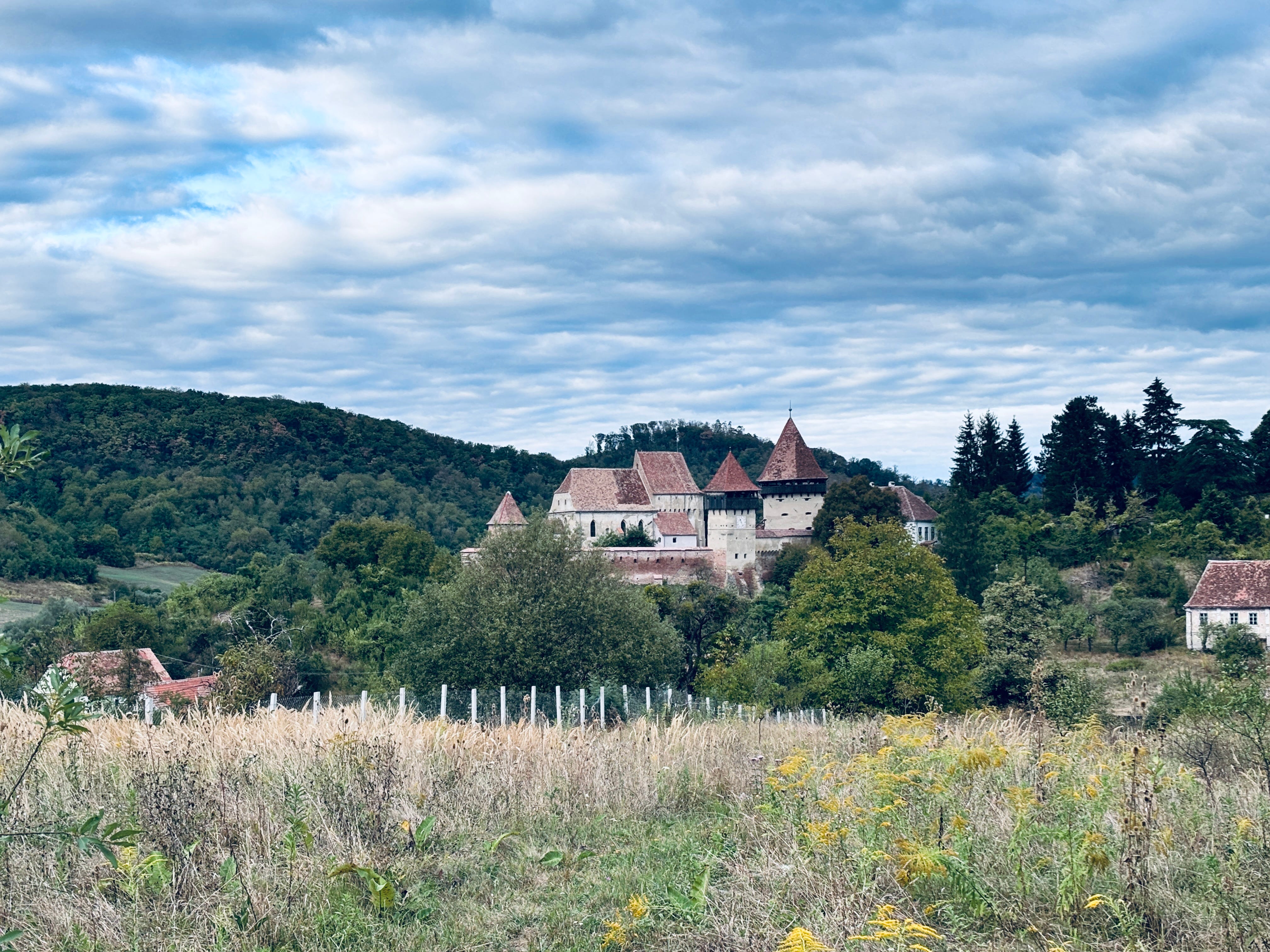
And then, here we are, a group of food enthusiasts suddenly realising that what is memorable is exactly the combination of all of this. Take one of these elements home with you to the UK, Canada, the US, or Australia, and it won’t feel the same.
Then you get to a point when you say to yourself, ‘I couldn’t eat another thing!’ This doesn’t work in Transylvania. Suddenly, another plate appears, with another ten stuffed peppers on the table. You try to convince the others to have an extra pepper, but really, it's customary to eat seconds. Usually, the wine helps here, and before you know it, it turns into a journey through the vineyards of Transylvania.


A Wine Journey
This is another point I like to make on these tours. Did you know that Romania is a country of wine? Excellent wine, if I may add. I like to watch people’s faces when they realise how good the wine is. I also choose a few vineyards and grapes with a good story behind them.
I start with a famous Romanian grape, Fetească, and explore both its white and red versions, as well as the different Transylvanian vineyards that make outstanding wines. At the same time, there are other Romanian grapes, less famous but just as virtuous, that I like to include and support in their revival. So far, they have been very well received.
We cannot understand the food without the wine.
Returning To An Ever Changing Story
In this respect, every visit complicates things for me. Contemporary life, changing villages, younger generations, old recipes, new businesses, Romanian-Hungarian-Saxon influences, supermarkets alongside gardens, and old culinary traditions such as preserving and fermenting.
In other words: the more I visit, the less simple the place becomes.
That’s a very good reason to return.
I meet more and more people involved in restoring Transylvania, whether it is a house, an orchard, a plot of land, a farm animal heritage breed, a recipe, or even a village and a fortified church. It is about the past, but also very much about the present: how they make it all work, how they give these things new life, and how they make them relevant again.
Their enthusiasm is infectious.
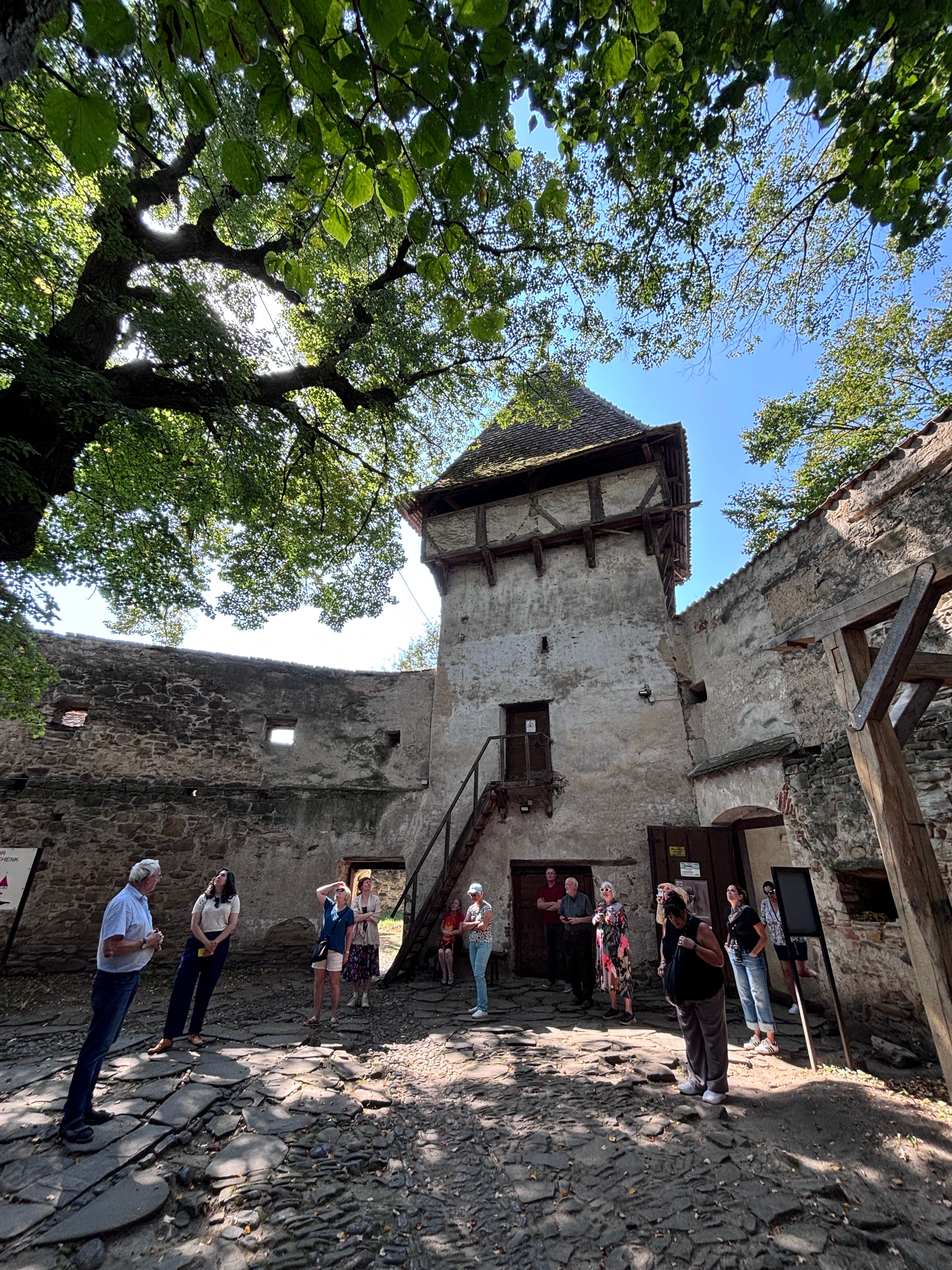
When I return to their places, I feel part of their life project, and everyone else with me feels the same.
I want every part of our journey in Transylvania to contribute to something bigger: preserving traditions, keeping knowledge alive and supporting the small communities that are pushing all of this forward.
It is not easy, in a country like Romania, to be the custodian of a culture when life is hard, and opportunities are few and far between. A life where you are the opportunity — you and your plot of land, your orchard, your house or the church you are restoring, is a life of hard graft.
So we meet and talk to some of these custodians, feel inspired by them and feel part of their lives.
And every time I return, I find that the story has evolved. Something has changed, something has grown or something has improved.
With this, my tour becomes more complex, but also gains even more meaning.
I bring only a small group to Transylvania every year, so we have time to chat, connect, slow down and notice things around us.
Next year there will be another group, 8 days, another collection of kitchens and tables and people I am already looking forward to seeing again.
I also have a few new places in mind, although I suspect the best moments will be the ones I haven’t planned yet.
But about the ones I know, you can read here: https://irinageorgescu.com/culinary-transylvania-tour/
Thank you @Lyndsey Resnick
Thank you @Giulia Scarpaleggia